A Monthly Guide to Selected Asian Holidays and Customs
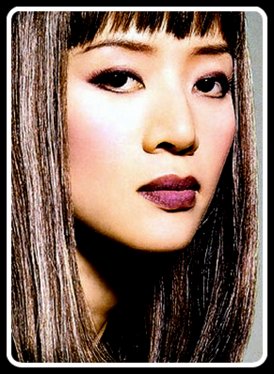
In Memory of Anita Mui
About the Cover
On the morning of December 30th 2003 (HK Time), I was on the internet searching Asian Entertainment websites for information for this publication. All of the Anita Mui websites were shut down except for a few that had message boards. Some of the websites had notes attached reading that they did not know what or how to write about what had just happened.
I first read a Toronto News article out of Canada about the death of Anita Mui.
I called my wife Yolanda and told her that something terrible had just happened in Hong Kong.
The loss was so great that I like others could not even talk about it. I went into music stores here in America looking of Mui cds. Each time that I found one I would become upset.
When I was in Hong Kong I could not even bring myself to look for her music. Maybe I felt that I was too close. For persons that feel the same way, I do not have to explain.
Information has now been translated into over a dozen different languages and dialects.
Still it is difficult to speak. There is a loss for words in any language.
I know someone will ask me why have Anita Mui on the Cover? I reply that there could be no one else. Like fine artwork and music, all is not fully appreciated or understood until after the artist has left us.
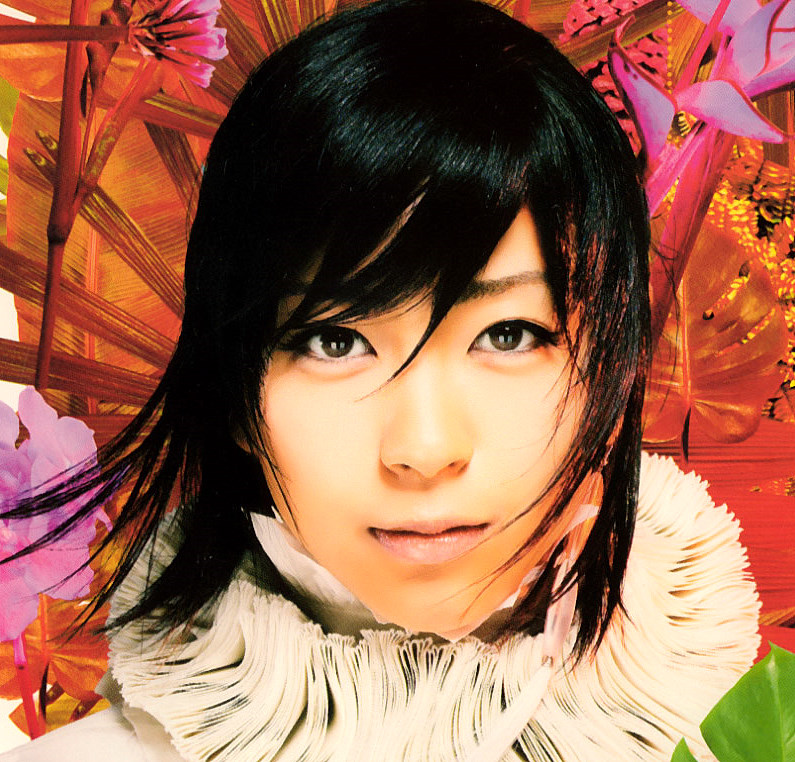
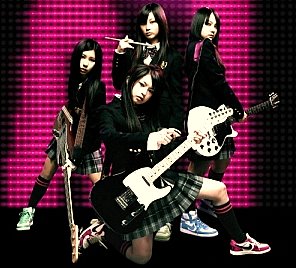
Born in New York City to Japanese parents with roots in music industry. Hikki is one of the top Music Entertainer, songwriter and production artist in Japan. Her debut album "First Love" is Japan's biggest selling album of all time. Above video is "Sakura Drops".
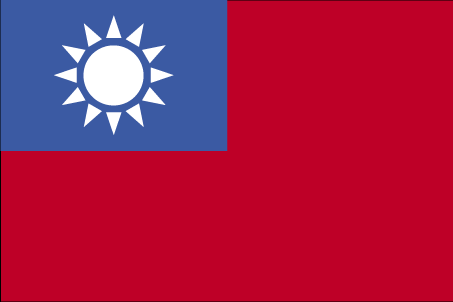
January 1, 1912 is the birthday of Asia's first democratic republic, the Republic of China.
The Founding Father Dr. Sun Yat-sen, united patriots to revolt against the China Ch'ing court.
This revolt spread rapidly from Kwangchou to other parts of southern China.
On December 29, province representatives had a meeting to elect the president of the new republic of Taiwan. Dr.Sun Yat-sen, was officially inaugurated the next year on New Year's Day..
This date marks the founding day of the Republic of China.
Families in Taiwan patriotically hang the national flag and the streets are decorated with lanterns, banners. This is done in memory of the ROC's revolutionary heroes.
Special Video Mix Tribute to the Japanese euro-pop group. Shanadoo is a Japanese Eurodance group produced in Germany. Shanadoo's music was exclusive to Germany and other European markets, such as Austria, until 2006 when they expanded into other international markets such as Japan. This is a good example of euro-pop dance audio "My Samurai" as a tribute. Genießen Sie das Erscheinen !
This website is designed for
Windows 10 .
Explorer 11 @ 1024x768 compatibility mode
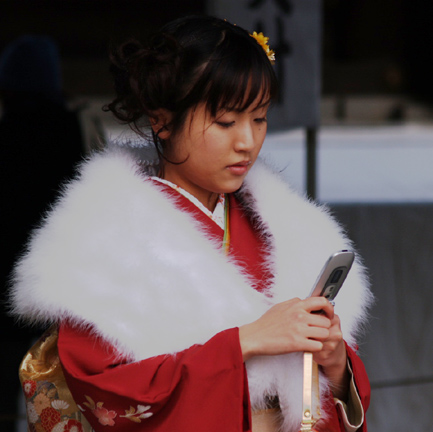
Coming of Age Day
Seijin-no-hi
January
Japan
Gempuku
This festival originates from a shinto ceremony called gempuku.
Until the 19th century this custom demanded that all 10 to 16 year old boys born of a samourai's family receive a headdress (eboshi) and an adult's name during a ceremony marking their passage from child to adulthood.
A variation of this ceremony called kanrei was observed by the aristocracy where the boys would receive a fundoshi. Similar to a Sumo loincloth.
The ceremony for the young girls called is called mogi, or “to don a dress”. They were at that time declared ready to be married at between the ages of 12 and 16.
They then received a kimono, and in some regions, the girls' eyebrows were shaved and their teeth were blackened.
Gempuku
Coming of Age in Japan
Gempuku was made a Japanese national holiday in 1948.
Today there are large-scale coming-of-age ceremonies held in all parts of Japan. Young women and men gather together to hear celebratory messages from local government.
Now, at the age of twenty, young people receive the right to drink, smoke and vote. They must also at this time accept their legal responsibilities.
Gempuku rituals, as in ancient times, set an occasion for the young adults of today to formally accept the responsibilities of family, religious and modern political affairs.
Ganjitsu, is one of Japan’s most important holidays, It is customary to visit Shinto and Buddhist shrines to pray for good luck.
Ippan Sanga
Ippan Sanga, on Jan. 2, is one of only two days when the Imperial Palace grounds are open to the public. The Emperor will wave to the public from behind bulletproof glass.
The Entrance to the Imperial Palace gardens is by Niju-bashi Bridge.
Ganjitsu in Japan is part of a three day festival called Oshogatsu.
On December 27 to January 4 and adjoining weekends, all government, school, public or private companies and organizations are closed.
Everyone will go home to visit family leaving very large cities like Tokyo nearly deserted.
O-sechi ryori are special dishes prepared for the first three days of the year. These special dishes are prepared in advance. No or little cooking is done during the holidays. Ingredients are chosen to ensure that all remains fresh.
Each special dish represents a wish for success and happiness for the family.
Simmered black soybeans are served in the wish that everyone will have a healthy life.
Japanese send New Year's cards called Nengajo rather than Christmas cards. Nengajo card all begin with set greetings.
You can learn to write your own cards and surprise your Japanese friends!
Kumiko Koda a J-Pop singer from Kyoto, officially debuted as a singer under the Avex Label with the single “Take Back” released December 2000. Koda’s seventh single, "Real Emotion" was the main Audio theme of the game Final Fantasy X-2. Above is a V-mix from SuzakuWorld.
In April 1521, Portuguese explorer Ferdinand Magellan, in the service of Charles I of Spain, arrived in Cebu.
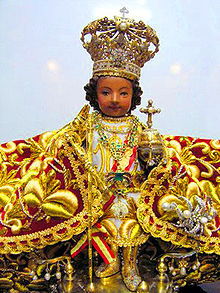
King Humabon and his wife Hara Amihan, pledged their allegiance to Spain. They changed to the Catholic faith, taking Christian names Carlos and Juana. Magellan gave Juana the Santo Nino statue as a symbol of the alliance.
The Spaniards returned to Cebu in February 1565. Cebu was the settlement of Basque explorer Miguel López de Legazpi, who later founded the city of Manila. He defeated Rajah Tupas, on April 27, and occupied the villages. The Santo Niño was found by Juan Camus a Spanish soldier, relatively unscathed in a burnt-out hut. This event was acknowledged as a miracle. A church: The Basilica Minore del Santo Niño was later constructed on this site.
During the Spanish colonial period, the image of the Santo Niño de Cebu was painted black. During World War II, an Augustinian priest brought the image to a convent of the Redemptorists for safekeeping. A bomb did fall on the church but did not explode. When the statue was returned to the Basilica after the war, the Augustinians commissioned anthropologist Dr. Mimi Trosdal at St. Theresa's College, Quezon City, to restore the image to its original color. She removed the black paint, and restored the image between 1948 and 1949.
Santo Nino
The Santo Niño was once considered the patron Saint of Cebu. Since the Holy Child is a representation of Jesus, the Second Part the Trinity, he cannot, as God, be considered a patron Saint. In 2002, the Archbishop of Cebu, declared the Virgin Mary, as the official patroness of the city and province of Cebu. There is no doubt that the statue enshrined at the Cebu Basilica is indeed the original brought by Magellan. This is the oldest existing Catholic artifact in the Philippines.
The origin of all the Santo Nino’s can be traced back to the Santo Niño de La Guardia in Spain.
In 1490 a group of Jewish men kinapped a young innocent boy to do a ritual sacrifice of a Christian child. He was hung from a cross.. They crucified him in a cruel mockery of the Passion of Christ. His heart and blood was removed and his head was cut off. His body was never found.
The subsequent trials lasted sixteen months. On November 16, 1491, the defendants were burned at the stake.
Tomás de Torquemada, first Inquisitor General of Spain used this and other events to expel the Jewish population from Spain in 1492. The town of La Guardia instituted an annual pageant honoring the child Santo Niño. This Holy Child is ritualy sacrificed each year in an elaborate ceremony.
The word Sinulog comes from the Cebuano adverb sulog which is "like water current movement," which describes the forward-backward dance of the ceremony.